YORK, PENNSYLVANIA | INDUSTRIAL ADDITIVE MANUFACTURING
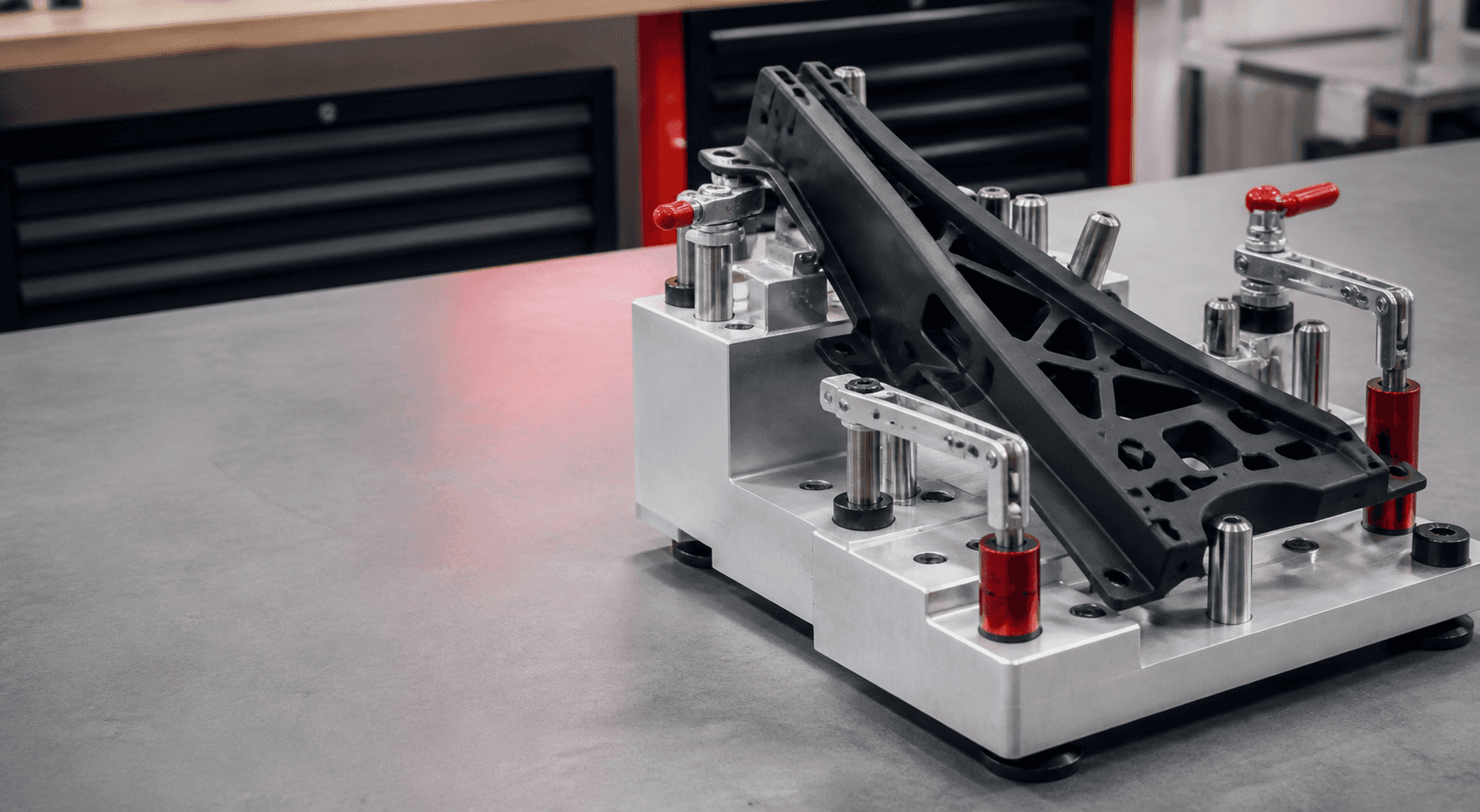
Representative additive manufacturing applications.
• Owner-operated technical support
• Functional industrial applications
• Prototype through recurring production
• York-area responsiveness
MANUFACTURING PROBLEMS SOLVED
Additive manufacturing is most valuable when it removes a practical constraint—not simply when a part can be printed.
Obsolete or unavailable parts
Review replacement paths when drawings, suppliers, or original tooling are no longer available.
High cost or long lead time
Evaluate low-volume parts that are inefficient to machine, mold, or source conventionally.
Production tooling bottlenecks
Develop fixtures, nests, guides, guards, adapters, and change parts around the real workflow.
Industrial 3D printing
Functional polymer parts for prototypes, manufacturing aids, replacement components, and low-volume needs.
Reverse engineering
Application review for existing parts when usable CAD is missing, supported by samples, measurements, drawings, or photographs.
CAD and design support
Practical design feedback focused on manufacturability, interfaces, loading, environment, and assembly.
Low-volume and recurring production
A path from initial fit-and-function review to repeat requirements, subject to confirmed process and quality needs.
Review All Capabilities
Typical applications include automation tooling, end-of-arm components, jigs and fixtures, machine change parts, functional prototypes, protective covers, brackets, adapters, and production support. Every application is reviewed for fit, loading, temperature, chemical exposure, wear, and risk.
Explore Applications

01
Send the application
Share the part, quantity, target date, operating conditions, and any available CAD, drawings, photos, or samples.
02
Review fit and risk
The application is reviewed for geometry, material, process suitability, interfaces, and missing information.
03
Confirm scope
You receive a project-specific recommendation and quote. Price and schedule depend on design, material, quantity, finishing, and review needs.
04
Produce and support
After approval, the work moves into production with direct communication and support for iteration or repeat needs.
Material selection is based on functional requirements rather than a generic menu. Available processes, production route, finishing, inspection, and application limitations are reviewed and confirmed for each project.
APPLICATION REVIEW
Available processes are selected according to project requirements. Material, tolerance, inspection, finishing, production route, and lead-time requirements are confirmed before quotation. Partner-supported capacity may be used when appropriate and disclosed during project review.
Thomas Boutin, Founder and Owner, brings engineering-management, project-management, industrial-equipment, and manufacturing problem-solving experience to each application. The goal is practical: understand the requirement, identify the right production path, and communicate clearly.
About Thomas
Can you help if I do not have CAD?
Yes. Start with a physical sample, photographs, a sketch, dimensions, or an existing drawing. The information needed depends on the part and its interfaces.
What should I send for an initial review?
Share the part or application, quantity, target date, operating environment, known material requirements, and any available source information. Engineering files can be provided securely after initial contact.
What affects price and schedule?
Geometry, size, material, quantity, inspection, finishing, application risk, model condition, and required design work all matter. Recommendations and timing are project-dependent.
Will every part be a fit for additive manufacturing?
No. If the requirements point to machining, molding, fabrication, or another route, the review should say so rather than force an unsuitable process.
Start with one application. Share what the part does, what is going wrong, and what a successful result needs to accomplish.
Request an Engineering Review